Rate describes a relationship
A conventional linear coil spring gains force in proportion to compression. Its rate is commonly expressed in newtons per millimetre. If its rate is 10 N/mm, another millimetre of compression adds 10 N of spring force within the intended working range. That relationship describes the spring itself; it does not automatically describe the force at the tyre.
The spring must support the motorcycle, rider, luggage and any passenger through the geometry connecting the wheel and spring. At the front, fork inclination affects the relationship between vertical load and axial force. At the rear, the swingarm and linkage introduce leverage. Comparing spring-rate numbers between different motorcycles without considering these mechanisms can therefore be misleading.
A progressive spring changes rate through its travel. A linear spring working through a rising-rate linkage can also produce increasing effective support at the wheel. These are different mechanisms, even when their overall effects sound similar in conversation.
Preload changes the starting force
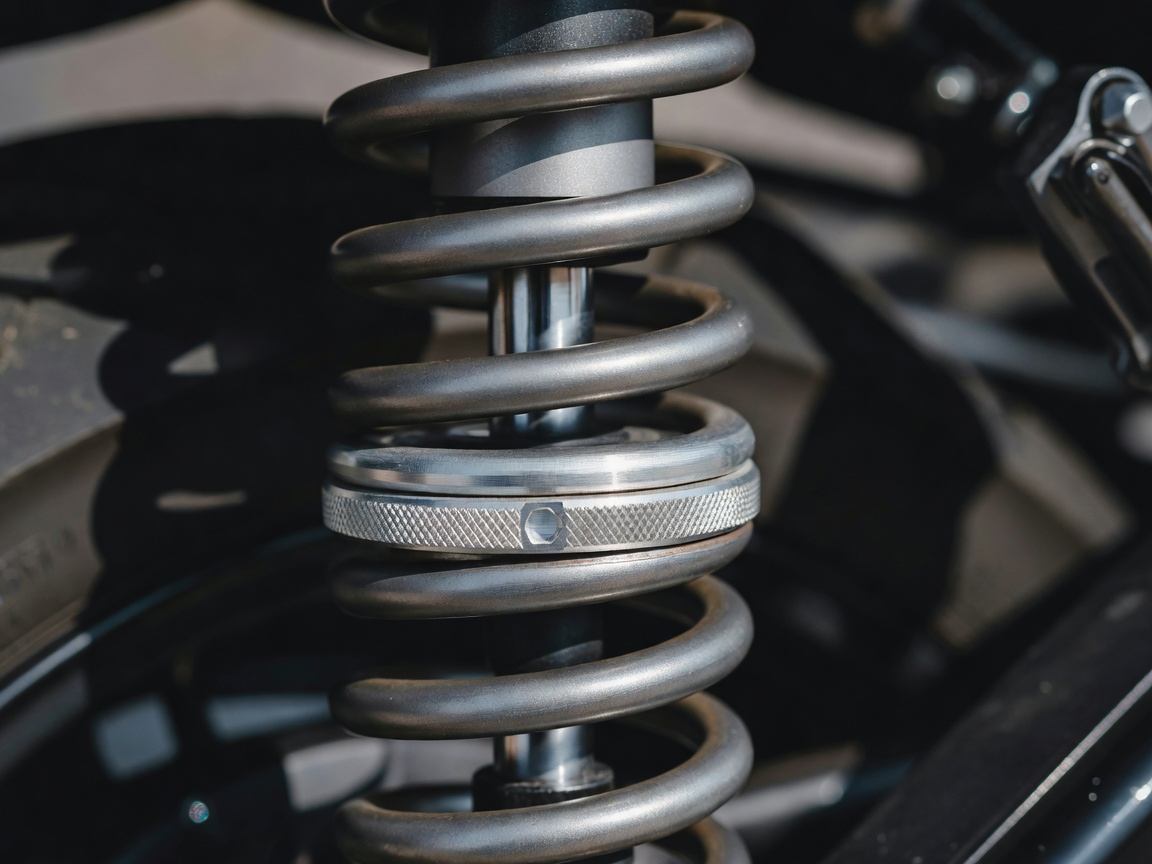
Preload is compression already applied to a spring when the suspension is at a defined reference position. On a conventional linear spring, adding preload increases the force present at that position without changing the rate. The motorcycle will generally settle at a different ride height under the same load, subject to travel limits, friction and the actual suspension arrangement.
This distinction explains why turning a preload collar is not the same as fitting a higher-rate spring. A different rate changes how much additional force develops as travel increases. More preload mainly shifts the operating position. Excessive preload can leave insufficient extension travel, while insufficient preload can leave too little compression travel for the intended load.
Special top-out springs, negative springs and unusual fork arrangements complicate the simple picture. Consult the manufacturer's terminology and measurement method before interpreting an adjuster scale or comparing measurements with another machine.
Sag is an observation, not a verdict
Sag describes how far suspension settles from an appropriate extended reference. A motorcycle-only measurement and a rider-loaded measurement answer different questions. The difference between them provides context about the added load, but friction, measurement technique, luggage and rider position can all influence the result.
Published targets are specific to a machine, intended use and measurement convention. They are not universal rules. A seemingly acceptable rider-loaded value can coexist with unsuitable spring support elsewhere in the travel. Equally, an unusual measurement may reflect a measurement error, binding component or non-standard hardware rather than the spring alone.
Supporting a motorcycle for measurements can create a fall or crushing hazard. Use the approved support method and competent assistance. Do not improvise lifting points or put fingers near moving linkages to obtain a number.
Geometry moves with the suspension
Compression changes the motorcycle's attitude and the relative positions of its wheels, chassis and steering axis. Front and rear movement together influence rake, trail, swingarm angle and available ground clearance. The direction and size of each change depend on the complete geometry; a simple statement such as “raise the rear for better handling” omits important limits and trade-offs.
Braking transfers load towards the front contact patch, while acceleration commonly shifts load rearwards. Suspension motion also depends on braking forces, chain forces and anti-squat or anti-dive characteristics. A spring does not independently decide how much pitch occurs: damping, tyre forces, geometry and rider inputs all participate.
The operating position changes the travel available in both directions. This diagram omits friction and dynamic forces.
A useful engineering question is therefore not “How stiff should it feel?” but “Is this system carrying its intended load with suitable travel and geometry?” Answering that requires the correct model data and a sound mechanical baseline.
Keep the baseline traceable
Record the exact motorcycle variant, installed spring identification, current load and any approved changes. Manufacturer information from Honda, Yamaha, BMW Motorrad or Ducati should be matched to the relevant model and year. An Öhlins or K-Tech replacement unit may have different instructions from the original component.
When load requirements fall outside the approved adjustment range, seek a qualified suspension specialist rather than compensating with arbitrary damping changes. Springs contain stored energy; disassembly and replacement require proper tools, procedures and inspection.